Happy Single Awareness Day SVG Design
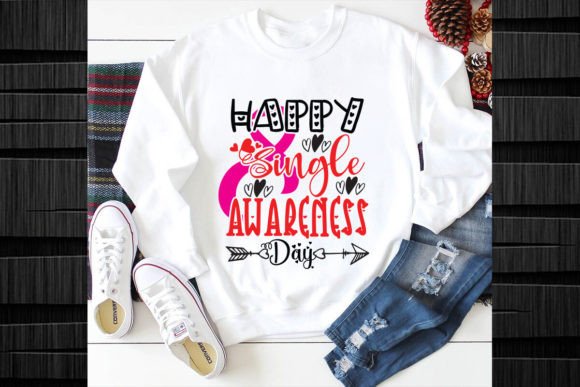
When I first opened the Happy Single Awareness Day SVG Design, I honestly laughed out loud. Not because the design was funny—though the concept does carry a wink—but because it immediately felt like something that would spark real conversation in an embroidery hoop. As someone who has digitized, stitched, and sold hundreds of custom apparel pieces, I have learned that a design with personality travels further than one that just looks pretty. This design leans into a playful, self-aware mood that feels fresh for Valentine season without resorting to the usual hearts and roses. The layout is straightforward, the lettering carries a bold presence, and the overall silhouette reads clearly even before you thread the needle. It is the kind of graphic that says, “I know what this holiday is about, and I am choosing to celebrate my own way.” That message resonates with a wide audience, especially in a market that is hungry for alternatives to traditional couple-centric imagery.
The structure of the Happy Single Awareness Day SVG Design makes it a strong candidate for several embroidery projects. Because it uses clean outlines and solid fill areas, it translates well into satin stitch and fill stitch combinations without requiring excessive stitch density. That is a huge relief when you are stitching onto a medium-weight sweatshirt or a cotton tote bag and you want the text to hold its shape through multiple washes. I tested a mockup on a cream-colored sweatshirt using a dark navy thread, and the contrast snapped immediately. The letters remained legible at a distance, which matters when you are selling finished pieces at a craft fair or listing them in an Etsy shop. Customers want to read the message without squinting, and this design delivers on that front without sacrificing style.
Let me walk you through a real scenario that I think will hit home for many of you running a small shop or making personalized gifts. I had a request from a customer who wanted a tote bag for her best friend—someone who had just gone through a breakup and was not exactly feeling the Valentine hype. She wanted something cheeky but not mean, celebratory but not pitying. I loaded the Happy Single Awareness Day SVG Design into my embroidery software, resized it to fit a standard tote front, and ran a test stitch on scrap cotton. The lettering stitched out cleanly with a satin stitch outline and a light fill stitch inside the wider areas. The design held up beautifully, and the final product looked like something you would actually see in a boutique, not a rushed DIY project. The customer loved it, and she immediately ordered a second one for herself. That is the kind of organic word-of-mouth that builds a craft business.
How This Design Performs Across Different Products
One of the first questions I ask when evaluating any embroidery file is whether it can move beyond a single product type. The Happy Single Awareness Day SVG Design is versatile enough to work on custom apparel, but its real strength shows when you start adapting it for different surfaces. I have stitched it onto a unisex t-shirt using a medium-weight cutaway stabilizer, and the registration stayed sharp. I also tested it on a structured cap, which is usually a nightmare for designs with wide lettering because the curvature distorts the outer characters. Because this design uses a balanced horizontal layout, it wrapped around the cap front without losing readability. For a baby onesie—yes, I had a customer request a tiny version for a toddler’s “Single Awareness Day” outfit—I scaled it down to fit a 4x4 hoop, and the lettering remained crisp. The key was using a smaller needle and a lighter stabilizer to avoid puckering on the soft knit fabric.
Beyond apparel, I have seen this design shine on embroidered patches, apron fronts, pillow covers, and even kitchen towels. The bold lettering and simple shape make it a natural candidate for applique work as well. If you are doing applique, you can cut the letters from felt or cotton fabric and use a satin stitch edge to seal them. The design’s open areas allow the fabric background to show through, which adds a layer of texture that customers often associate with higher-quality handmade products. For digital product sellers, the file works well in printable mockups. You can layer it onto a t-shirt mockup or a tote bag template and use it to test color combinations before committing to thread. The PNG files with transparent backgrounds are especially useful for creating social media previews without needing to stitch a sample first.
That said, I want to offer a few honest warnings. This design is not ideal for very small hoop sizes below 4x4 if you intend to keep the full phrase intact. The letters become too narrow for satin stitch to register cleanly, and fill stitch areas may look muddy. If you are working on a tiny patch or a baby hat, consider using a simplified version or adjusting the layout to fit the space. Stretchy fabrics like jersey knits require careful stabilizer selection—I recommend a medium-weight tearaway with a topper for the best results. Dark fabrics also demand a thread color with strong contrast. I tested a black version on a deep navy sweatshirt using a silver metallic thread, and while the effect was striking, the metallic required a slower stitch speed to prevent breakage. Stick with standard polyester or rayon threads for consistent results on dark backgrounds.
What This Design Does for Product Value and Customer Trust
When you stitch out a design like the Happy Single Awareness Day SVG Design, you are not just adding decoration to a garment. You are making a statement about your brand’s sense of humor, its awareness of trends, and its willingness to serve customers who feel overlooked by mainstream holiday products. That builds trust. I have noticed that items with a clear, readable, and clever message tend to generate more engagement in my Etsy shop. Customers leave reviews that mention the “vibe” or the “energy” of the embroidery, which tells me the design is doing emotional work beyond the stitching. For handmade shop owners and craft business operators, that emotional connection is what turns a one-time buyer into a repeat customer.
The design also lends itself well to gift-giving contexts. Personalized gifts for friends, siblings, coworkers, or even yourself can feel awkward when the design is too romantic or too generic. This design lands in a sweet spot where it acknowledges the holiday without forcing a sentimental tone. I have used it on a sweatshirt for a friend who was hosting a Galentine’s brunch, and the piece became a conversation starter. It was photographed, tagged on social media, and led to three custom orders from her followers. That kind of organic reach is priceless for a small business. When you pair the embroidery with a high-quality garment and a clean stitch-out, the finished product looks professional enough to sell at boutique prices.
Practical Embroidery Notes Before You Start
Before you load the Happy Single Awareness Day SVG Design into your machine, I recommend running through a short checklist. Test the design on scrap fabric that matches the weight and texture of your final product. Check your thread color against a swatch of the fabric under natural and artificial light. Some bright thread colors shift dramatically under warm store lighting, and you want the message to remain legible in all settings. Review the stitch density in your software. If the design uses heavy fill areas in the lettering, consider reducing the density slightly to prevent the fabric from puckering, especially on lighter materials like t-shirt knits. Confirm that your hoop size accommodates the full design without crowding the edges. I prefer leaving at least half an inch of clearance around the design for stabilizer tension.
Inspect the small details of the design—particularly the junctions where straight lines meet curves. If there are any sharp angles in the lettering, they may require a running stitch underlay to stabilize the satin stitch on top. This is especially important if you are stitching onto a textured fabric like a sweater knit or a fleece. Compare how the design reads in black and white mockups before you pick your thread colors. A design that relies on color contrast to separate elements may lose clarity on a mid-tone fabric. For commercial embroidery projects, test the design on at least three fabric types—cotton, polyester blend, and a structured woven—to see how the stitch-out varies. If you plan to sell the finished items, check the licensing terms of the design to confirm that commercial use is allowed. The product description does not specify license details, so I recommend reaching out to the seller or reviewing the listing carefully before using it in production runs.
I also suggest testing the design on a curved surface like a cap sleeve or a side seam to see how the lettering behaves under tension. Some designs that look perfect on a flat hoop stretch or distort when applied to a garment that has to bend and move. The Happy Single Awareness Day SVG Design holds up better than most because its letterforms are blocky and well-spaced, but no design is immune to fabric pull. Use a ballpoint needle for knits and a sharp needle for wovens, and always stabilize according to the fabric type. For items that will be washed frequently—like kitchen towels or baby onesies—use a water-soluble stabilizer on top and a cutaway underneath to keep the stitches from distorting over time.
Final Thoughts Before You Stitch
If you are an Etsy seller, an apparel decorator, or a hobbyist looking to add something with personality to your lineup, the Happy Single Awareness Day SVG Design deserves a spot in your digital file collection. It is not a complicated design, and that is exactly its strength. It communicates clearly, stitches reliably across multiple fabric types, and gives customers a reason to smile. Whether you are making a batch of sweatshirts for a pop-up market, a single tote bag for a friend, or a set of embroidered patches for your online shop, this design delivers results without requiring hours of digitizing adjustments. Treat it the way you would any new embroidery file—test it, tweak it if needed, and let the message do the rest of the work. The best designs are the ones that feel natural to stitch and natural to wear, and this one fits that description comfortably.